Handmade Mantel Clocks vs. Mass Manufactured Mantel Clocks: Which One Is Right for Your Home?


A mantel clock sitting above a fireplace does far more than tell the time. It anchors a room, reflects the personality of the people who live there, and — if chosen well — becomes one of those objects that gets passed down through generations.
But when it comes to choosing one, buyers today face a fundamental question: do you go with a handmade mantel clock crafted by a skilled artisan, or a mass manufactured mantel clock produced in a factory?
Both have real advantages, and neither is automatically the better choice. The right answer depends entirely on what you value most.
This guide breaks down the key differences of Handmade Mantel Clocks vs. Mass Manufactured Mantel Clocks based on — materials, craftsmanship, price, longevity, and style — so you can make an informed decision.
A Brief History: From Handcraft to Factory Floor
The mantel clock has a rich and surprisingly democratic history. Originating in France in the mid-18th century, the earliest versions were ornate, expensive, and reserved for the wealthy.
Early French clockmakers crafted elaborate pieces from gilt bronze, ormolu (an alloy of 93% bronze and 7% gold), porcelain, and marble, often topped with sculpted figures of angels, goddesses, and mythological characters. Owning one was a statement of social standing.

The industrial revolution changed everything. By the 1830s, American manufacturers discovered that wooden clock movements — far cheaper than brass — could bring the mantel clock into ordinary homes.
By the 1870s, companies like Ansonia, Seth Thomas, and Waterbury were producing clocks at a scale previously unimaginable, pioneering mass production techniques while still incorporating ornate carvings, polished brass accents, and elegant Roman numerals. The mantel clock had gone from an aristocratic luxury to an everyday household object.
Today, that same divide still shapes the market. On one side, artisan clockmakers continue the handcraft tradition. On the other, factory-produced clocks offer accessibility and variety at every price point.
What Makes a Handmade Mantel Clock Different?
The defining feature of a handmade mantel clock is the human touch present at every stage of production. Skilled artisans — from woodworkers in Iowa and Pennsylvania to clockmakers in Germany, Australia and India — shape, finish, and assemble each piece individually. No two are exactly alike.

Materials and Construction
Handmade clocks typically use solid, high-quality natural materials. Artisans often select premium hardwoods like walnut, cherry, maple, teak, oak, jarrah, or blackwood, choosing each piece of timber for its grain, color, and character.

A clock crafted from solid cherry hardwood, for example, will look noticeably different from one made beside it — the grain pattern is unique to that particular piece of wood.
Metal accents in handmade clocks are similarly considered. Hand-cast brass hardware, sand-cast aluminum, or wrought iron details are common, and many artisans source materials locally with sustainability in mind.
The result is a clock that feels substantial and alive in a way mass-produced pieces rarely match.
The Movement Inside
Most contemporary handmade mantel clocks use either a mechanical or a quartz movement.
Mechanical movements — which require periodic winding — carry a certain romance.
Watching the pendulum swing, hearing the rhythmic tick, winding the clock each week: these small rituals connect the owner to an older, slower sense of time.
Quartz movements, while battery-operated, deliver excellent accuracy and low maintenance, and many artisan makers pair them with beautiful handcrafted cases for the best of both worlds.

Customization and Personality
Perhaps the most compelling advantage of a handmade clock is the ability to personalize it.
Many artisans offer custom finishes, hand-engraved plaques, choice of wood species, and even custom dimensions. Some will hand-paint the clock face, making each piece genuinely one of a kind.
This level of personal involvement transforms a mantel clock from a decorative object into something with a story — which is exactly why handmade clocks are among the most meaningful gifts for weddings, retirements, and milestone anniversaries.
What a Mass Manufactured Mantel Clock Offers
Mass manufactured mantel clocks are not inferior by definition. The best factory-produced clocks — particularly from established German and American brands — represent serious engineering and reliable timekeeping at a fraction of the cost of bespoke pieces.

Consistency and Reliability
One of the genuine strengths of factory production is consistency. Every clock in a given model line will have the same movement, the same dimensions, and the same finish.
For buyers who want a known quantity — a clock that looks exactly like the one in the catalog photo and works exactly as described — mass manufacturing delivers that reliability.
Brands like Hermle, for instance, have been manufacturing clocks since 1922 and make their own clock parts using high-quality materials. Their factory-produced mantel clocks come with multi-year manufacturer warranties and movements built to last decades with proper care.
Affordability and Accessibility
The most obvious advantage is price. A handmade artisan mantel clock can range from a few hundred dollars to well over a thousand, depending on materials and maker.
A good mass manufactured option can be found for well under $200 and still carry attractive design details, Westminster chime movements, and solid case construction.
For someone furnishing a first home, or wanting a stylish clock for an office or guest room without a significant investment, mass manufactured clocks offer tremendous value.
Style Range
Factory production also enables an enormous range of styles.
Whether you want a sleek minimalist clock in brushed aluminum, a traditional mahogany case with Roman numerals, a tambour-style Art Deco silhouette, or a contemporary white marble look, mass manufacturers produce every aesthetic in volume.
Shopping for a specific style or size is generally easier with manufactured clocks, simply because the inventory is larger and more consistent.
Feature | Handmade Mantel Clock | Mass Manufactured Mantel Clock |
Materials | Solid hardwood, hand-selected | MDF, veneers, or engineered wood common |
Uniqueness | Each piece is one of a kind | Identical to others in the same model |
Price | Higher ($300–$2,000+) | Accessible ($50–$500) |
Customization | Often available | Rarely available |
Movement | Mechanical or quality quartz | Usually quartz; mechanical in premium lines |
Longevity | Heirloom quality, built to last generations | Good, but varies widely by brand |
Lead Time | Made to order; may take weeks | Ships immediately |
Ideal for | Gifts, heirlooms, statement pieces | Everyday décor, budget-conscious buyers |
Which Should You Choose?
The answer comes down to three things: purpose, budget, and how you relate to the objects in your home.
When to choose a handmade mantel clock ?
If you want something that will outlast the house it sits in.
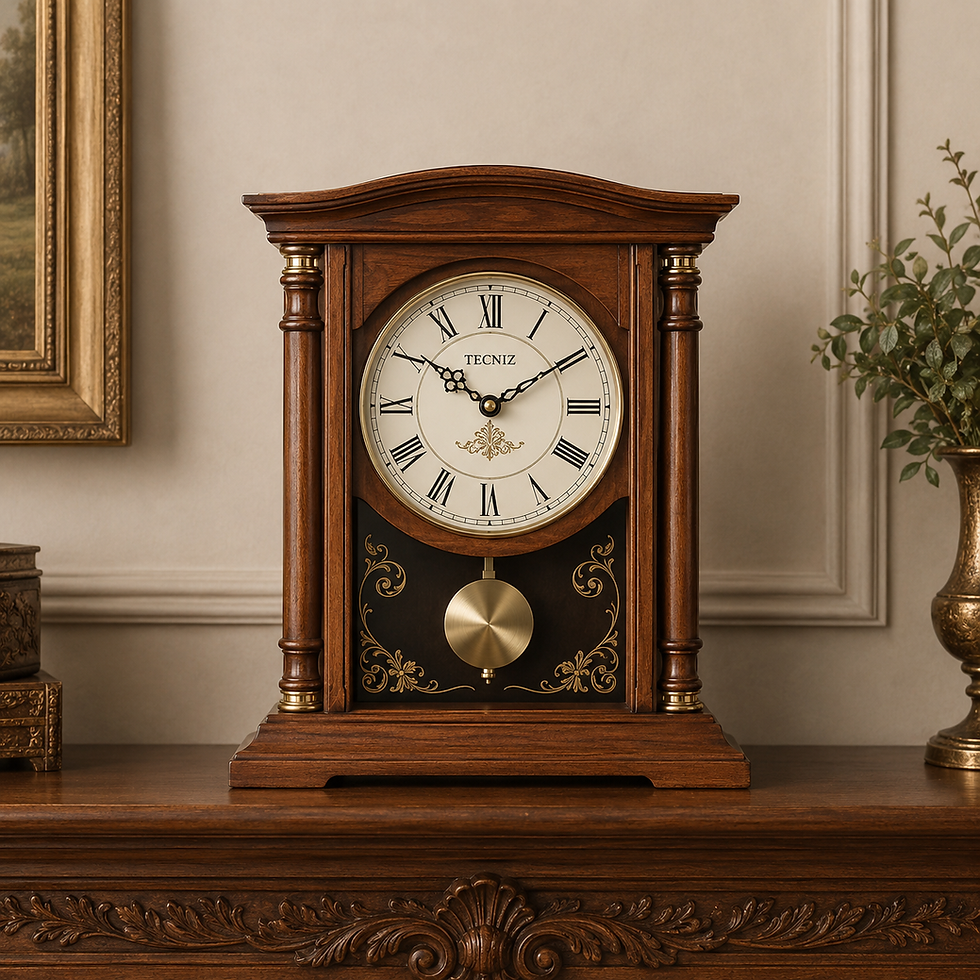
If you are buying as a gift, marking a meaningful occasion, or looking for a focal piece that will anchor a room for decades.
The investment in a handmade clock pays itself back in beauty, durability, and meaning.
The slight imperfections — the variation in wood grain,
the hand-painted details — are not flaws; they are proof of the human hands behind it.
When to choose a mass manufactured mantel clock ?
If you want reliable, attractive timekeeping without a long wait or a large outlay.
A well-made factory clock from a reputable brand will serve you faithfully for years, and the wide range of styles means you are likely to find one that fits your décor beautifully.
For a secondary room, a rental home, or a first clock purchase, it is an entirely sensible choice.
When to Consider both Handmade Mantel Clocks and a Mass Manufactured Mantel Clocks ?
If you are building a curated home over time. Many people own several manufactured clocks and one or two handmade pieces — positioned as statement objects where they will be noticed most. This layered approach lets you appreciate both ends of the spectrum.
Caring for Your Mantel Clock
Regardless of whether you choose a handmade or mass-manufactured mantel clock, proper care will help preserve its appearance, accuracy, and longevity.
Dust Regularly: Clean the clock case with a soft, dry cloth to prevent dust buildup and maintain its finish.
Avoid Harsh Cleaners: Never use strong chemicals or abrasive cleaners on wooden cases, as they can damage finishes and dry out the wood.
Wind Mechanical Clocks Consistently: If your clock has a mechanical movement, wind it on a regular schedule—typically every seven to eight days—to ensure reliable operation. Avoid over winding, which can strain or damage the mainspring.
Schedule Professional Servicing: Have mechanical clocks inspected and serviced by a qualified clockmaker every few years. Routine maintenance helps identify minor issues before they become expensive repairs.
Protect from Sunlight and Humidity: Keep the clock away from direct sunlight, excessive moisture, and extreme temperature fluctuations. These conditions can warp wooden cases and affect the accuracy of the movement.
Place on a Stable Surface: Position your mantel clock on a level, vibration-free surface to promote accurate timekeeping and reduce unnecessary wear.
Final Thought: Handmade Mantel Clocks vs. Mass Manufactured Mantel Clocks
The mantel clock has endured for nearly three centuries because it occupies a rare category of object: functional, beautiful, and emotionally resonant all at once.
Whether you choose a handmade piece built by a craftsman who spent days on your particular clock, or a well-engineered factory model that thousands of others also own, you are participating in a tradition that stretches back to the drawing rooms of 18th-century France.
The best clock is simply the one that makes you pause for a moment every time you walk into the room — and quietly appreciate that time, in some form, has always been worth marking.
What is the difference between a mantel clock and a mantle clock?
They are the same object — just two spellings of the same word. "Mantel" (with an e) technically refers to the shelf above a fireplace, making "mantel clock" the more precise spelling. "Mantle clock" is a common alternate spelling and is widely accepted in everyday use.
How long does a handmade mantel clock last?
A well-crafted handmade mantel clock, properly maintained, can last well over 100 years. Many antique handmade clocks from the 19th century are still running today. The use of solid hardwood and quality movements — rather than engineered wood and cheap components — is what gives artisan clocks their heirloom lifespan.
Are mass manufactured mantel clocks worth buying?
Absolutely. A quality mass manufactured mantel clock from a reputable brand like Hermle, Howard Miller, or Seth Thomas offers reliable timekeeping, attractive design, and good durability at an accessible price. They are a sensible choice for everyday décor and secondary rooms.
What type of movement is best for a mantel clock — mechanical or quartz?
It depends on your lifestyle. A mechanical movement offers the traditional experience — the rhythmic tick, the pendulum swing, the weekly winding ritual — and is ideal for collectors and enthusiasts. A quartz movement is battery-powered, highly accurate, and virtually maintenance-free, making it the more practical choice for most modern households.
Can I customize a handmade mantel clock?
Yes — customization is one of the biggest advantages of buying from an artisan maker. Many offer choices in wood species, finish, dial style, hand-engraved plaques, and even clock dimensions. This makes handmade clocks especially popular as personalized gifts for weddings, retirements, and anniversaries.
How often should I wind a mechanical mantel clock?
Most mechanical mantel clocks need winding every seven to eight days. It is best to wind on a consistent day each week, and to stop as soon as you feel resistance — never force the key, as overwinding can damage the mainspring and require a costly repair.
What wood is most commonly used in handmade mantel clocks?
Artisan clockmakers most commonly work with hardwoods like walnut, cherry, oak, maple, teak and mahogany. Rarer options include jarrah and blackwood, which are particularly popular among Australian makers. Each wood species brings a distinct grain pattern, color tone, and character to the finished piece.
How do I clean and maintain a wooden mantel clock case?
Dust the case regularly with a soft, dry cloth.
For deeper cleaning, use a small amount of furniture-appropriate wood polish applied gently.
Avoid water, alcohol-based sprays, and harsh chemical cleaners, all of which can strip the finish or dry out the wood over time.
Keep the clock away from direct sunlight and humid environments.
Why are handmade mantel clocks more expensive than mass manufactured ones?
The price reflects the time, skill, and material quality involved. An artisan may spend several days selecting timber, shaping the case, finishing surfaces by hand, and assembling the movement on a single clock.
The materials — solid hardwood, hand-cast brass hardware — also cost significantly more than the MDF and veneers commonly used in factory production.
Is a handmade mantel clock a good gift?
It is one of the most thoughtful gifts you can give for a major occasion. A handmade clock carries personal meaning, lasts for generations, and can be customized with an engraved message or the recipient's name.
It is particularly well-suited for weddings, milestone anniversaries, retirements, and housewarmings where you want to give something lasting rather than disposable.


Comments