The Enduring Appeal of Wooden Clocks: More Than Just Timekeepers

Did you know that the earliest known mechanical clocks, dating back to the 14th century, were often housed in wooden cases? This historical connection highlights a timeless truth: wooden clocks are far more than mere instruments for telling time. They are pieces of art, reflections of craftsmanship, and warm, natural additions to any living space.

In an era dominated by sleek, minimalist digital displays and mass-produced plastic, the appeal of a clock crafted from natural wood remains remarkably strong.
This article delves into the rich history, diverse styles, craftsmanship, and enduring charm of wooden clocks, exploring why they continue to captivate and why they might be the perfect addition to your home or office.
A Journey Through Time: The History of Wooden Clocks
The story of clocks is intrinsically linked to the evolution of human ingenuity and our desire to measure and understand the passage of time. While sundials and water clocks were used for millennia, the development of mechanical clocks in Europe during the late Middle Ages marked a significant leap forward.
Early Mechanical Marvels
The first mechanical clocks, appearing around the 13th and 14th centuries, were large, complex, and often housed in towers. Wood was the primary material for their construction due to its availability and workability.
Gears, wheels, and frames were meticulously carved from sturdy timbers. These early clocks were not precise by today's standards but represented a monumental achievement in engineering. They were often public clocks, striking bells to mark the hours for the community.

The Rise of the Wooden Case
As clockmaking technology advanced, so did the artistry of clock cases. By the 17th century, domestic clocks became more common. Wooden cases not only protected the delicate clockwork but also became decorative elements, reflecting the styles of the era. The demand for clocks grew, leading to specialized craftsmen who focused on both the mechanics and the aesthetics.
Iconic Styles Emerge
Several iconic styles of wooden clocks emerged and endured for centuries:
The Grandfather Clock: Perhaps the most recognizable wooden clock, the grandfather clock (or longcase clock) is a tall, freestanding pendulum clock enclosed in a wooden case. Originating in the late 17th century, these clocks were status symbols, showcasing wealth and sophistication. Their imposing presence and the rhythmic "tick-tock" of their pendulums have become synonymous with tradition and stability.
The Mantel Clock: Smaller and designed to sit on a mantelpiece or shelf, wooden mantel clocks gained popularity in the 18th and 19th centuries. They came in a vast array of styles, from ornate Baroque designs to simpler, more utilitarian forms.
The Wall Clock: Simple, functional, and often featuring a prominent pendulum, wooden wall clocks were a staple in homes and public buildings for centuries. The iconic "cuckoo clock," originating from the Black Forest region of Germany, is a charming and intricate example of a wooden wall clock, famed for its animated bird that announces the hour.
The Allure of Wood: Why Choose a Wooden Clock Today?
In a world awash with synthetic materials, wood offers a unique set of qualities that continue to make wooden clocks desirable.

Heritage Noir Square Wooden Wall Clock 
Aurora Classic Wooden Wall Clock - Minimalistic Wooden Clock 
Aurex Pendulum Wall Clock - Handcrafted Teakwood Octagon Pendulum Clock
Natural Beauty and Warmth
Wood is a natural material that brings an inherent warmth and beauty to any environment. Unlike metal or plastic, wood has a unique grain, texture, and color that can vary from piece to piece, making each clock subtly unique.
This natural variation adds character and a sense of organic elegance that synthetic materials struggle to replicate. The rich hues of walnut, the light tones of maple, or the rustic charm of oak can complement a wide range of interior design styles, from modern minimalist to traditional rustic.
Durability and Longevity
When properly cared for, wooden clocks can last for generations. High-quality wood, such as hardwoods, is naturally durable and resistant to wear and tear.
Many antique wooden clocks are still functional today, a testament to the longevity of the material and the craftsmanship involved. This enduring quality makes a wooden clock not just a purchase, but an investment and a potential heirloom.
Eco-Friendliness and Sustainability
For environmentally conscious consumers, wooden clocks can be an attractive choice. When sourced from sustainably managed forests, wood is a renewable resource. Many clockmakers today are committed to using ethically sourced timber, offering consumers peace of mind.
The natural biodegradability of wood also contrasts with the long-term environmental impact of plastics. According to the U.S. Forest Service, forests in the United States are growing at a rate that outpaces harvesting, indicating a healthy and sustainable timber supply when managed responsibly.
The Tactile Experience
There's a certain satisfaction in interacting with objects made from natural materials.
The smooth, polished surface of a wooden clock, the gentle weight of its case, and even the subtle scent of the wood can create a more engaging and pleasant sensory experience than touching cold plastic or metal.
This tactile connection can make the act of checking the time feel more grounded and less detached.
A Connection to Craftsmanship
Many wooden clocks are not mass-produced but are the result of skilled craftsmanship.
Whether it's a hand-carved detail, a meticulously finished surface, or the precision of the internal mechanism, a wooden clock often represents a dedication to quality and artistry.
This appreciation for handmade items is a significant factor in the continued popularity of wooden clocks.
Diverse Styles and Designs: Finding the Perfect Wooden Clock
The world of wooden clocks is incredibly diverse, offering a style to suit every taste and decor.

Heritage Decagon - Large wooden wall clock for living room 
Regalia Octagon Teak Wood Wall Clock with Classic Roman Dial 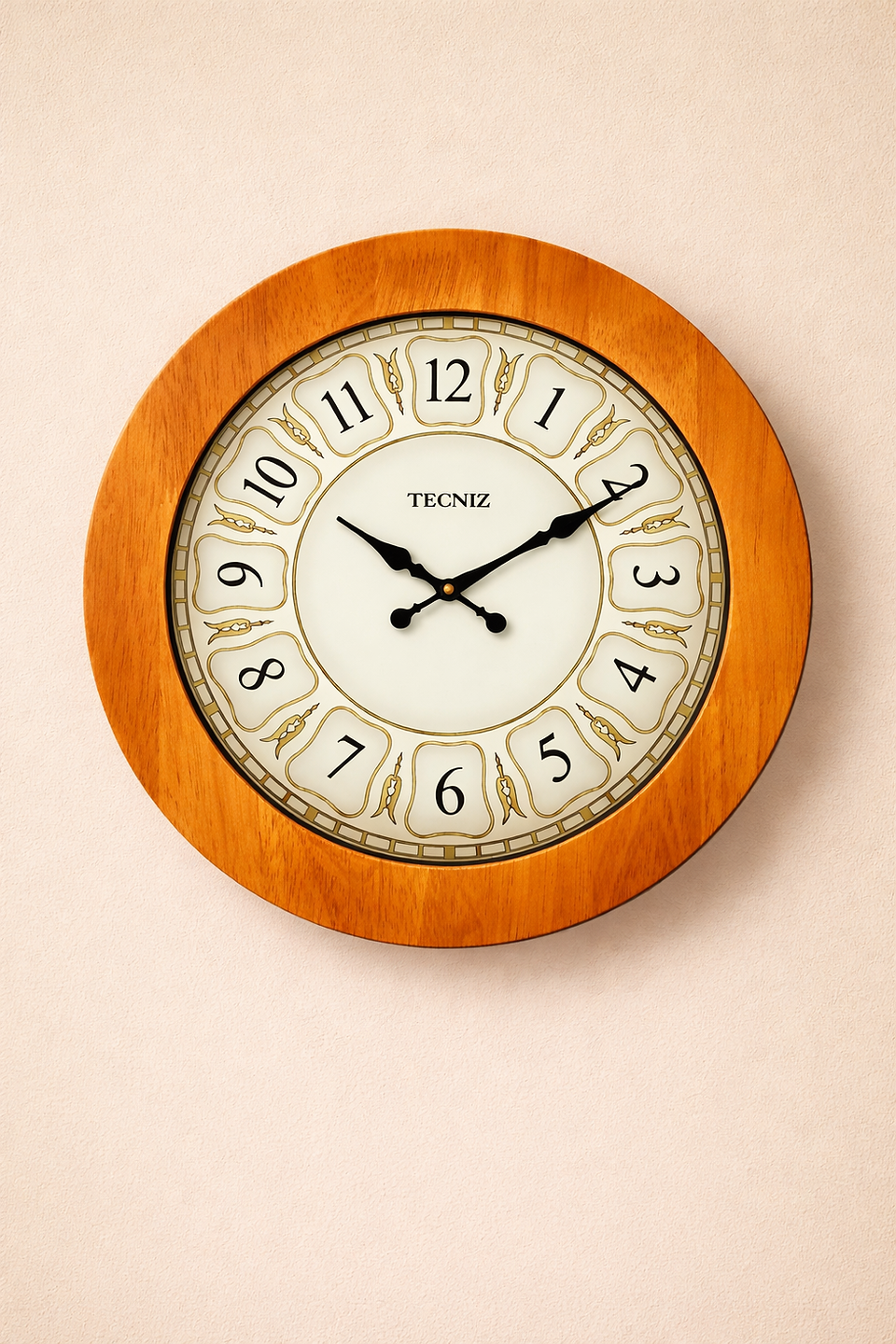
Aurelius Heritage Wooden Wall Clock – Ornate Classic Dial
Contemporary and Modern
Minimalist Designs: Clean lines, simple shapes, and natural wood finishes characterize modern wooden clocks. They often feature minimalist faces with clear, easy-to-read numerals or even no numerals at all, relying on sleek hands to indicate the time. These designs blend seamlessly into contemporary interiors.
Geometric Forms: Clocks with geometric shapes, such as octagonal shaped clocks or circular designs clocks with unique cut-outs or layered wood elements, offer a modern artistic flair.
Unfinished or Natural Wood: Some contemporary designs embrace the raw beauty of wood, featuring unfinished or lightly treated surfaces that highlight the natural grain and imperfections.
Traditional and Classic
Grandfather Clocks: As mentioned, these remain a symbol of tradition and elegance. Available in various wood types and finishes, from dark mahogany to lighter oak, they are statement pieces for entryways or living rooms.
Mantel Clocks: From ornate, carved styles with intricate details to more subdued, classic designs, wooden mantel clocks add a touch of vintage charm to fireplaces and shelves.
Shaker Style: Inspired by the simple, functional aesthetic of the Shakers, these clocks often feature clean lines, natural wood finishes, and unadorned faces, emphasizing practicality and understated beauty.
Rustic and Farmhouse
Reclaimed Wood: Clocks made from reclaimed wood, barn wood, or distressed timber evoke a sense of history and rustic charm. The imperfections of the aged wood add character and a story to the piece.
Farmhouse Designs: These often feature distressed finishes, hand-painted numerals, and simple, sturdy construction, perfectly complementing a farmhouse or country-style decor.
Natural Edge Designs: Clocks that incorporate the natural, irregular edge of a wood slab offer a unique, organic look that celebrates the raw form of the tree.
The Cuckoo Clock
A distinct category, the cuckoo clock is a traditional German Black Forest creation. These intricate wooden clocks are renowned for their carved details, often depicting forest scenes, and their signature animated cuckoo bird that emerges from a small door to announce the hours with a cheerful call. While traditional designs are plentiful, modern interpretations also exist, offering a whimsical touch to any room.
The Craftsmanship Behind the Clock
The creation of a quality wooden clock involves a blend of woodworking skill and horological expertise.

Wood Selection and Preparation
The choice of wood is crucial. Hardwoods like oak, maple, cherry, teak and walnut are often preferred for their durability, beauty, and stability. Softer woods might be used for decorative elements or less structural parts. The wood must be properly seasoned and dried to prevent warping or cracking over time.
Woodworking Techniques
Skilled woodworkers employ various techniques:
Joinery: Precise joinery methods, such as dovetails or mortise and tenon joints, ensure the structural integrity and aesthetic appeal of the case.
Carving and Inlay: Many traditional and ornate clocks feature hand-carved details or intricate wood inlay work, showcasing exceptional artistry.
Finishing: The finishing process is vital for both protection and aesthetics. This can involve sanding to a smooth finish, staining to enhance the wood's natural color, and applying protective lacquers or oils.
Clockwork Mechanisms
While the case is made of wood, the heart of the clock is its mechanism. This can range from:
Quartz Movements: Battery-powered and highly accurate, quartz movements are common in many modern wooden clocks. They are reliable and low-maintenance.
Mechanical Movements: These are the traditional clockwork mechanisms, powered by weights or springs. Mechanical clock movement requires maintenance but offer the authentic ticking sound and the visual appeal of moving gears and pendulums.
Many enthusiasts prefer mechanical clocks for their historical significance and the satisfying rhythm they provide.
For a detailed comparison, read our guide on why quartz pendulum clocks outperform mechanical ones in everyday use.
Caring for Your Wooden Clock
To ensure your wooden clock remains a beautiful and functional piece for years to come, proper care is essential.
Cleaning
Dusting: Regularly dust the wooden surfaces with a soft, dry cloth. Avoid using abrasive cleaners or feather dusters that can scratch the finish.
Wood Polish: For a deeper clean and to maintain the luster, use a high-quality wood polish specifically designed for the type of wood and finish your clock has. Apply the polish to a soft cloth, not directly to the clock, and wipe gently. Always test a small, inconspicuous area first.
Environment
Humidity and Temperature: Wood is sensitive to changes in humidity and temperature. Avoid placing wooden clocks in areas with extreme fluctuations, such as direct sunlight, near heating vents, or in damp basements. Consistent, moderate conditions are best. The ideal relative humidity for wood furniture is generally between 40% and 50%.
Sunlight: Direct sunlight can fade the wood's color and damage the finish over time. Position your clock away from direct sun exposure.
Maintenance
Mechanical Clocks: If you have a mechanical clock, it will require periodic winding. Follow the manufacturer's instructions carefully. These clocks also benefit from professional servicing by a clockmaker every few years to ensure the mechanism is clean and properly lubricated.
Avoid Moisture: Never use excessive water when cleaning. Wipe up spills immediately.
The Psychological and Aesthetic Impact of Wooden Clocks
Beyond their practical function and aesthetic appeal, wooden clocks can have a subtle but significant impact on our well-being and the atmosphere of a room.

A Sense of Calm and Stability
The natural materials and the often rhythmic ticking of a wooden clock can contribute to a calming atmosphere. In a fast-paced world, the steady beat of a pendulum can be a grounding presence, a reminder of a more measured pace of life. The inherent warmth of wood is also known to create a sense of comfort and coziness.
A Connection to Nature
Bringing natural elements into our homes is a growing trend, often referred to as biophilic design. Wooden clocks are a simple yet effective way to incorporate a piece of nature indoors, fostering a connection to the natural world even within an urban environment. This connection can reduce stress and enhance feelings of well-being.
A Statement Piece
A well-chosen wooden clock can serve as a focal point in a room. Whether it's a grand grandfather clock, an intricately carved cuckoo clock, or a sleek, modern design, it can draw the eye and add personality to the decor. It signals an appreciation for quality, craftsmanship, and natural beauty.
Where to Find Wooden Clocks
Wooden clocks can be found in a variety of places:
Specialty Clock Shops: These stores often carry a wide selection of new and antique wooden clocks, from reputable brands to artisan-made pieces.
Antique Stores and Flea Markets: For those seeking unique, vintage, or antique wooden clocks, these locations can be treasure troves. Be prepared to do some searching and potentially some restoration.
Online Retailers: A vast array of wooden clocks, from mass-produced to handcrafted, are available through online marketplaces and dedicated websites. Pay close attention to product descriptions, materials, and customer reviews.
Artisan Workshops: Many independent woodworkers and clockmakers create and sell their own designs directly through their websites or at craft fairs. This is an excellent way to find unique, high-quality pieces and support small businesses.
The Future of Wooden Clocks
While technology continues to evolve, the appeal of traditional and natural materials remains strong. The demand for handcrafted goods, sustainable products, and items that add warmth and character to our homes suggests that wooden clocks will continue to be cherished.
As designers experiment with new forms and finishes, and as consumers increasingly seek pieces that resonate with authenticity and quality, the wooden clock is poised to remain a timeless addition to our lives.
Conclusion
Wooden clocks are more than just timekeeping devices; they are a blend of history, art, and natural beauty. From the earliest mechanical marvels to the diverse styles available today, they have graced homes and hearts for centuries.
Their enduring appeal lies in the inherent warmth and character of wood, the testament to craftsmanship they represent, and the calming, grounding presence they bring to a space. Whether you are drawn to the imposing elegance of a grandfather clock, the whimsical charm of a cuckoo clock, or the minimalist beauty of a modern design, a wooden clock offers a unique way to mark the passage of time while adding a touch of natural artistry to your surroundings.
They are a reminder that in a world of fleeting digital trends, some things, like the beauty of wood and the art of fine craftsmanship, are truly timeless.
Frequently Asked Questions About Wooden Clocks
Are wooden clocks accurate?
Yes, wooden clocks can be very accurate, depending on the type of mechanism they contain. Clocks with high-quality quartz movements are extremely precise. Mechanical clocks, while requiring winding and maintenance, can also be highly accurate when properly regulated and maintained by a professional clockmaker. The accuracy is primarily determined by the internal workings, not the material of the case itself.
How do I clean a wooden clock?
To clean a wooden clock, start by dusting it gently with a soft, dry microfiber cloth. For more thorough cleaning, use a wood polish specifically designed for the type of wood and finish on your clock. Apply the polish to a cloth first, then wipe the surface gently. Avoid using water or harsh chemical cleaners, as these can damage the wood and its finish. Always test any cleaning product on an inconspicuous area first.
What is the best type of wood for a clock?
Hardwoods such as Teak, oak, maple, cherry, and walnut are often preferred for clock cases due to their durability, stability, and aesthetic appeal. These woods are less prone to warping and cracking than softer woods. The choice of wood also depends on the desired look and style of the clock.
How often should a mechanical wooden clock be serviced?
Mechanical clocks, including wooden ones, typically require professional servicing every 3 to 5 years. This maintenance ensures that the internal mechanism is clean, properly lubricated, and functioning optimally. Regular servicing helps to prolong the life of the clock and maintain its accuracy.
Can wooden clocks be damaged by humidity?
Yes, wood is sensitive to changes in humidity. Excessive moisture can cause wood to swell, warp, or even rot, while very dry conditions can lead to cracking or shrinking. It's best to keep wooden clocks in a stable environment with moderate humidity levels (ideally between 40% and 50% relative humidity) and avoid placing them near sources of extreme temperature or moisture, such as heating vents, fireplaces, or bathrooms.
External Resources
The British Horological Institute (BHI): https://www.bhi.co.uk/
The BHI is a professional body for horologists (clock and watch specialists) in the UK. Their website offers resources and information related to clockmaking, history, and maintenance.
The Horological Foundation: https://www.horologicalfoundation.org/
This organization supports the study and preservation of horology. Their site can provide insights into the historical and technical aspects of clockmaking.
American Clock and Watch Museum: https://www.clockandwatchmuseum.org/
Located in Bristol, Connecticut, this museum is dedicated to the history of timekeeping devices in America. Their exhibits and resources offer a deep dive into the evolution of clocks and watches.


Comments